
Program Details
DATES
8DAYS
SERVICE HOURS
TUITION
$4500 (Plus Airfare)
AVAILABILITY
Alongside our partner, Somos Impact Travel, students will assist researchers at the Toucan Ridge Ecology and Education Society (T.R.E.E.S.) field station in studying birds, bats, and freshwater turtles before exploring the caves and Maya heritage of Belize’s Cayo District.
Program Overview
In this program, students will learn about tropical ecology and wildlife conservation while gaining hands-on field research experience in Belize.
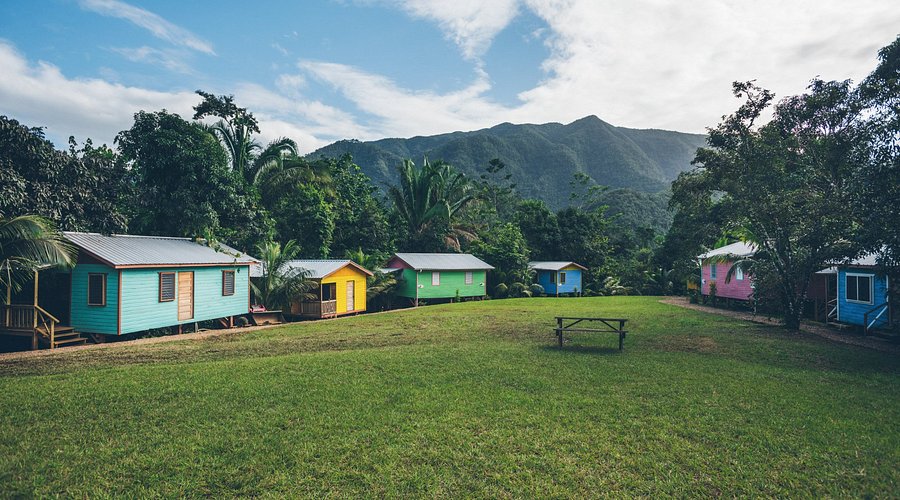
After arriving in Belize City, students will travel to the Toucan Ridge Ecology and Education Society (T.R.E.E.S.), a private biological field station and nature reserve in the Cayo District dedicated to tropical ecology research, conservation, and environmental education. Over four nights at the station, students will work alongside field biologists who monitor bird, bat, and turtle populations over the long term. They will begin with pre-dawn bird research and a mist netting demonstration (seasonal), then learn species identification, habitat mapping, and data recording. They will study bat ecology and take part in bat monitoring, join guided night walks to observe nocturnal wildlife, and spend a morning along the river learning turtle tracking techniques and freshwater habitat assessment. A forest botany session on medicinal plants and forest carbon storage, along with a data lab, helps students turn what they collect into a bigger picture of how the ecosystem fits together.
From the field station, students will travel to San Ignacio, stopping to hike through karst terrain and swim at St. Herman’s Blue Hole National Park. The next day, they will take part in a full-day guided expedition into Actun Tunichil Muknal (ATM) Cave, where they will learn about cave formation and hydrology, Maya ceremonial history, and the challenge of protecting archaeological sites. Evening reflection sessions explore how Maya civilization adapted to its environment and what it can teach us about modern conservation.
Throughout the program, students will practice careful observation, data collection, and systems thinking, and they will leave with a deeper understanding of what makes conservation effective and how they can apply those lessons at home.
Please note that programs are subject to change based on the health and safety of participants and our partners.
Program Highlights
Assist with real wildlife research at the T.R.E.E.S. field station, a working jungle research center in the Maya Mountains.
Take part in bat monitoring and guided night walks to observe nocturnal wildlife.
Study turtle tracking and freshwater ecology along the river.
Explore medicinal plants and forest carbon storage with traditional ecological knowledge.
Take on a full-day expedition into Actun Tunichil Muknal (ATM) Cave and learn about Maya ceremonial history.
Turn field data into ecosystem models and reflect on what makes conservation effective.
Course Elements
1 is the least rigorous, 5 is the most rigorous
LEARNING SERVICE
CURRICULUM
TREKKING
LIVING CONDITIONS
ON THE MOVE
REMOTENESS

The Toucan Ridge Ecology and Education Society (T.R.E.E.S.) is an organization that promotes tropical ecology research and conservation in Belize, which encourages and supports students learning through real field science.
Belize
Photo GalleryItinerary
1
2
3
4
5
6
7
8
NOTE
Belize : In Three Phases
1
PRE-TRAVEL CURRICULUM
2
FIELD STUDY
3
LIFELONG NETWORK
Travel Journal
During the travel phase of each SStS course, you will spend time reflecting and processing your experience. There is no example travel journal as 2027 is the first time this course will be run.
Important Details
TUITION*
Tuition (students from partner schools): $4500
Tuition (students from non-partner schools): $4700
*Students attending a partner school receive a tuition discount. Click HERE to see partner schools. Please note that tuition does not include airfare.
AIRFARE*
Estimated Flight Cost: $1100
*All students travel to their program destination on a group flight booked by Students Shoulder-to-Shoulder. Participants are responsible for any increase in airfares imposed by the airlines. All participants are responsible for arranging their own transportation to the departure city. SStS will confirm airfare and connecting travel information approximately 60 days before travel.
FINANCIAL AID
SStS is in search of curious, compassionate, and globally minded students from all backgrounds. We will do everything possible to provide financial support to students who require assistance. If you would like to be considered for financial assistance, please indicate this on the application. Resources are limited and tend to be less than 50% of tuition.
TERMS & CONDITIONS
For a full description of our Terms and Conditions, please CLICK HERE.